
Refrigeration & Cold Rooms
Cold rooms, freezer rooms and process cooling for food, retail, hospitality and industry - designed to hold temperature under real-world use, not just on paper.
Stock value is the number that matters
A cold room is the only piece of equipment on most sites where a single failure can destroy more value overnight than the equipment itself is worth. That changes how it should be specified.
The common mistake is sizing plant for a sealed, undisturbed room. Real cold rooms have doors that open dozens of times a shift, warm product loaded in batches, and staff working inside. A system sized for the theoretical load will run continuously, never properly defrost, and slowly lose the battle on the busiest days of the year.
We size for how the room will actually be used, and we fit monitoring so you find out about a problem from an alarm rather than from a smell.
Refrigeration services
Cold rooms
Chilled storage for produce, dairy, meat, pharmacy and retail back-of-house, from a single walk-in to multi-room facilities.
Freezer rooms
Blast and holding freezers with defrost strategies that keep coils clear and doors sealing properly.
Process cooling
Temperature control for production, packing and preparation areas where the room itself is the process.
Monitoring & alarms
Temperature logging and out-of-band alerts - for peace of mind and for your food safety records.
Service & repair
Planned maintenance and breakdown repairs on existing plant, whoever installed it.
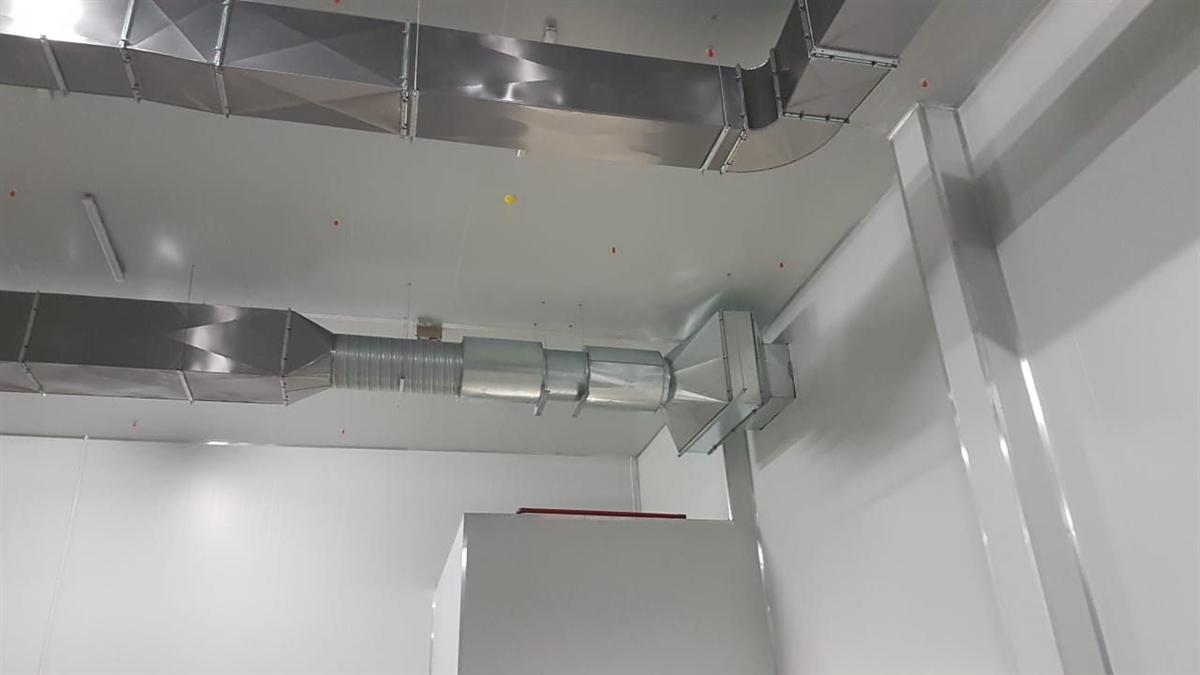
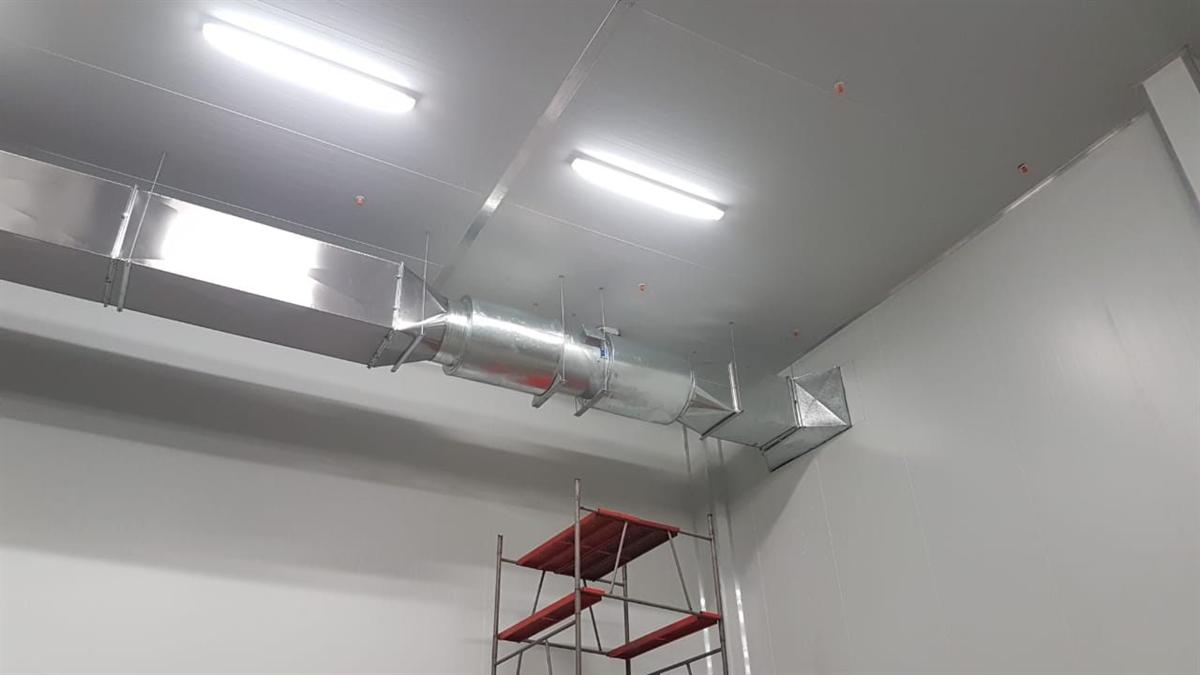
Hygienic ventilation
Food-grade ducting and filtered air for the processing areas that feed the cold store.
What we need to know
The more of this you can tell us up front, the more accurate the quote:
- What you are storing and the target temperature
- Room dimensions, or the space you have available
- How often the door opens and how product is loaded
- Whether product arrives warm or already chilled
- Floor traffic - pallet jacks, forklifts or foot only
- Any audit or compliance standard you have to meet
Common questions
What does a cold room installation involve?
More than a refrigeration unit. It covers the insulated panel envelope and door, the floor build-up and whether it needs to take pallet traffic, the refrigeration plant sized to your heat load and door-opening frequency, defrost strategy, condensate and defrost water drainage, temperature monitoring and alarms, and the electrical supply. We handle the whole package rather than leaving you to coordinate a panel supplier and a refrigeration contractor.
How cold does a cold room need to be?
It depends entirely on the product. Chilled storage for fresh produce, dairy and meat typically sits between 0 and 5 degrees. Freezer rooms generally run at minus 18 degrees or colder. Some products need tighter tolerances or specific humidity control. Tell us what you are storing and the throughput, and we will size the plant to hold that temperature under your actual door-opening pattern - not under laboratory conditions.
Can you repair and maintain an existing cold room?
Yes. We service and repair existing cold rooms, freezer rooms and refrigeration plant regardless of who installed them. Given what spoiled stock costs, cold rooms are the strongest case of all for a planned maintenance agreement with scheduled visits and temperature monitoring rather than waiting for a failure.
What happens if the cold room fails overnight?
That is exactly what alarms and monitoring are for. A temperature alarm that notifies someone when the room drifts out of band is the difference between a call-out and a written-off stockholding. We fit monitoring as standard on new installations and can retrofit it to existing rooms - on a room holding serious stock value, it pays for itself the first time it goes off.
Temperature bands and what belongs in each
| Application | Typical range | Notes |
|---|---|---|
| Fresh produce | +2 to +8 degrees | Humidity control matters as much as temperature |
| Dairy and meat chill | 0 to +4 degrees | Tight tolerance; monitoring usually required |
| Freezer storage | -18 degrees or colder | Defrost strategy is critical |
| Blast freezing | -30 degrees and below | Sized for pull-down rate, not holding load |
| Pharmacy / vaccine | +2 to +8 degrees | Alarmed and logged as a compliance requirement |
| Beverage / bar cellar | +6 to +12 degrees | Lower duty, often hidden plant |
Why cold rooms are sized differently to air conditioning
An office air conditioner is sized for a steady heat gain through a building envelope. A cold room is not. Its load is dominated by things that happen in bursts.
- Door openings. Every opening dumps warm, moist air into the room. A room with a door opening forty times a shift is a completely different problem to the same room opened twice.
- Product pull-down. Warm product loaded in batches carries a large heat load that must be removed within a defined window, not eventually.
- Respiration. Fresh produce generates its own heat as it ripens. It is a real term in the calculation, not a rounding error.
- People and lighting. Staff working inside and lights running add continuously.
- Defrost. Every defrost cycle puts heat into the room on purpose. The plant must recover from it.
Size for the theoretical sealed load and the room will run continuously, never defrost properly, and lose the battle on your busiest day of the year.
Defrost: the part that decides reliability
Below freezing, moisture from the air forms ice on the evaporator coil. Ice insulates. As it builds, the coil moves less heat, the room drifts warmer, and the system runs longer trying to compensate, which makes more ice. Left alone it becomes a solid block.
Defrost strategy is chosen to suit the room: off-cycle for chillers above freezing, electric element for most freezer rooms, hot gas where the duty justifies it. Frequency and duration need to match actual conditions, and getting it wrong in either direction causes problems. Too little and you ice up; too much and you are deliberately heating a freezer several times a day.
Panels, floors and doors
The envelope is as important as the plant. Insulated panel thickness is selected for the temperature band. Freezer rooms need an insulated floor and, in many cases, under-floor heating tape to stop the ground beneath freezing, heaving and cracking the slab.
Doors are the hardest-working component in the room. Heated frames prevent seals freezing shut, closers stop doors being left open, and strip curtains or air curtains cut infiltration during loading. A good door badly maintained undoes a correctly sized plant.
Monitoring, alarms and your records
A cold room is the only equipment on most sites where one failure can destroy more value overnight than the plant is worth. That changes what monitoring is worth.
- Continuous logging gives you a temperature record for audit and insurance.
- Out-of-band alarms notify someone before stock is lost, not after.
- Door-open alarms catch the most common cause of a warm room.
- Trend data shows plant degrading long before it fails.
On a room holding serious stock value, monitoring pays for itself the first time it goes off. We fit it as standard on new installations and can retrofit it to existing rooms regardless of who installed them.
Food safety and compliance
If you handle food, your cold storage sits inside your food safety system. Temperature records are routinely requested at audit, and "the room felt cold" is not a record. HACCP-based systems expect documented monitoring, defined corrective actions when a reading goes out of band, and evidence that the plant is maintained.
We provide service documentation in a form you can put in front of an auditor, and we will tell you plainly if an existing installation will not stand up to one.